
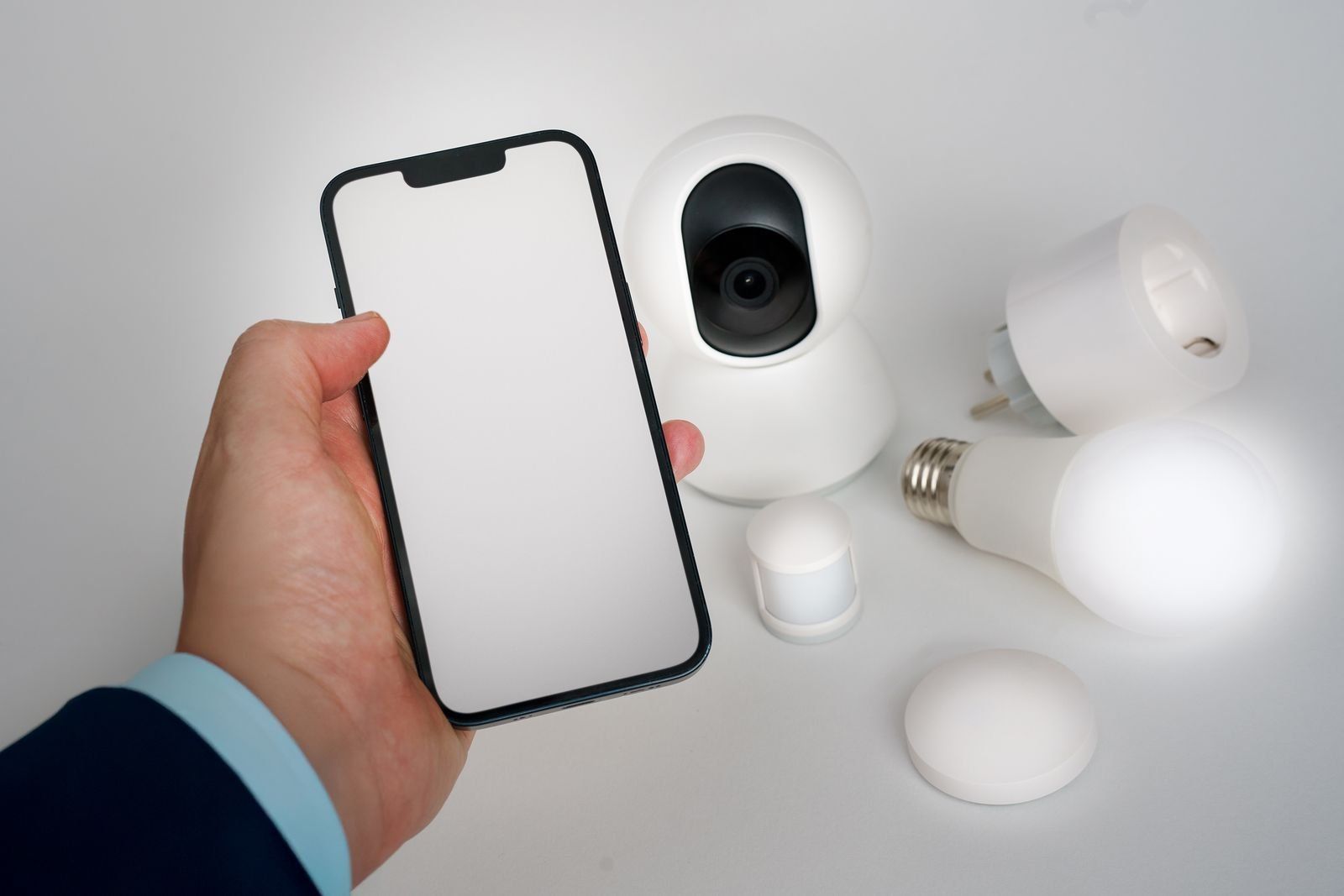
The text came in at 2:14 a.m.: Water detected, laundry room. The owners were asleep in Ohio, nine hundred miles from their house in Fernandina Beach on Amelia Island, and the app had done exactly what it promised. It knew. What it couldn't do was turn off the water, find the split supply line behind the washer, or get a mitigation crew in before the subfloor soaked it up. Smart home technology is genuinely good at telling you something's wrong. The question every second-home owner eventually runs into is what happens next.
We get asked some version of this all the time, usually by an owner who just finished wiring the house with sensors: do I still need someone checking on it? It's a fair question, and the honest answer isn't "throw out the gadgets." It's that the tech and a person on the ground do two different jobs, and the homes that come through a long absence best have both.
The short answer: sensors report, people respond
A smart home is a very good reporter. It will tell you the temperature, the humidity, whether a door opened, whether water touched the floor under a sensor. What it can't do is look, smell, judge, or act. It can't tell a harmless drip from a failing water heater, open a closet that smells musty, or walk the roof line after a storm. And when it fires an alert, someone still has to go.
That's the whole idea behind home watch: a trained set of eyes inside the house on a regular schedule, and a local contact who can be at the door when something goes wrong. Your devices make that person faster and better informed. They don't replace them.
The devices worth having in a coastal Florida second home
If you're setting up a house you'll leave for weeks or months at a time, these are the ones that earn their keep on a barrier island. We've named a few well-known brands in each category as examples, not endorsements. We're not paid by any of them, and features vary by model, so check the specifics before you buy.
- A smart thermostat that reports humidity, not just temperature. In a closed-up Florida house, humidity is the number that matters most. Models from Google Nest, ecobee, and Honeywell Home display indoor humidity; make sure the one you choose can also alert you on it. Set alerts for high humidity and high temperature, so a failing AC shows up on your phone instead of on your walls. We cover the settings in what temperature to set your AC when away in Florida.
- Leak sensors in the usual places. Under sinks, beside the water heater, under the washer, and at the air handler's drain pan, where a clogged condensate line backs up. Moen, YoLink, and Govee all sell inexpensive sensors that push an alert to your phone.
- An automatic water shutoff valve. The one device that can actually act: it shuts the main when it detects a leak or unusual flow. Moen's Flo Smart Water Shutoff and the Phyn Plus are two of the best-known whole-home options, and both are typically installed on the main line by a licensed plumber, which we can contact, schedule, and meet at the house for you. Paired with leak sensors, it turns a flooded house into a wet floor, and some insurers offer a discount for having one, which is worth asking about alongside the questions in does home insurance cover a vacant house.
- A smart lock with individual codes. Schlage Encode and Yale Assure are common choices. One code for the cleaner, one for pool service, one for a contractor, each of which can be revoked, plus a log of who came and when. More on that in our home security guide for seasonal residents.
- A few well-placed cameras and a monitored alarm. Entry points and the driveway, not every room. Ring, Arlo, and SimpliSafe are popular for cameras, and ADT, SimpliSafe, and Ring all offer professionally monitored alarms. If you can, pick a monitored plan with cellular backup so the alarm can still call out when the Wi-Fi is down. And an alarm is only as good as the person it calls, which we'll get to.
- Power-loss and connectivity alerts. Many hubs and thermostats can notify you when they lose power or drop offline. Turn that on. It matters more than you'd think.
None of this is expensive relative to a single water claim, and all of it makes a home watch visit more useful, because we arrive already knowing what the house has been doing. And you don't have to be on the island to get it set up. Tell us what you want, and we'll contact the installer, coordinate the schedule, let them in, and make sure everything is connected and reporting to your phone before they leave.
What the app can't see
Here's the gap. Sensors only know about the exact spot they're sitting on. A leak sensor under the sink says nothing about the slow drip inside the wall, the window seal letting in wind-driven rain, or the soft spot spreading across a ceiling after a storm. A thermostat reports the air in the hallway, not the closet on the north wall where mildew is starting behind the winter coats.
Most of what goes wrong in an empty coastal home shows up first as something you'd notice with your eyes or your nose: a faint stain, a musty smell, condensation on a duct, a door that suddenly sticks. The EPA points to moisture as the root of mold problems, and moisture rarely lands neatly on a sensor. That's why every visit includes a walk for water intrusion around roofs, windows, and plumbing, and why our home wellness checks look at humidity, air, and the HVAC in the room, not just on the app. It's also a good reality check on the devices themselves. When the thermostat says 55 percent humidity and the guest room says otherwise, you want someone who notices.
Offline looks exactly like all-clear
This is the failure nobody plans for. Most smart home devices depend on two things: power and Wi-Fi. On Amelia Island, both go out, from summer thunderstorms, from a tropical system, from a transformer on the next street. When they do, your app doesn't show an emergency. It shows nothing, and a quiet app looks a lot like a quiet house.
Worse, power often comes back before the internet does. Routers and hubs don't always reconnect on their own, so a house can sit for days with the AC off from a tripped breaker, the fridge warming, and every sensor silent, while the owner assumes no news is good news. Ready.gov's power outage guidance is built around exactly this: after an outage, somebody has to physically check the food, the appliances, and the house. Batteries are the slower version of the same problem. Florida heat is hard on them, and a leak sensor with a dead battery is just a plastic puck on the floor.
After a storm or an outage, a home watch visit is how you find out what actually happened, and whether your system is back online. It's a big part of our hurricane prep work, and why the evacuation guide we wrote puts so much weight on who checks the house once it's safe to be back on the island.
The 2 a.m. alert, and who answers it
Go back to that laundry-room text. The best-case version of that night has three parts. The shutoff valve closes the main. The app wakes the owners. And a local person, already listed with the alarm or monitoring company and already holding a key, gets there first thing to find the source, start drying, and call the plumber.
That third part is what a keyholder service is for. Your monitoring company calls us instead of a phone six states away. We go to the house, work out whether it's a real event or a tripped sensor, let in whoever needs to get in, and send you photos and a plain-English note on what we found. We wrote more about how that works in what is a keyholder service. An alert without a responder is just very expensive worrying.
Keeping the tech itself working
Here's a part of the equation owners rarely think about: the devices need looking after too. On a regular visit, we're in the house anyway, which makes it easy to confirm the things the app can't confirm about itself:
- The thermostat's readings match what the room actually feels like.
- Leak sensors are still where they belong, not kicked under the dryer by the last cleaner.
- Hubs, routers, and cameras are powered and online after any outage.
- Outdoor cameras and doorbells aren't fogged or crusted with salt.
- Low-battery or offline devices get flagged to you the same day.
If something needs replacing, upgrading, or adding, we contact and coordinate the installer for you through our vendor coordination service: the right company, scheduled, met at the house, and the work checked before they go. For a bigger setup, like a whole-home water shutoff or a new alarm system, project management keeps it on track while you're away and makes sure it's tested before anyone calls it done.
Smart locks make everything else easier
The quiet win of a smart home is access. Instead of lockboxes and spare keys under the mat, every vendor gets their own code, and you can see exactly who came and went. That pairs naturally with the people side: when we schedule the pool service, the pest control visit, or the AC tech, we can meet them there, let them in, and confirm the work before they leave. Our concierge team uses the same access for arrivals, getting the house cooled, stocked, and ready before you land.
So, do you still need home watch?
If your house is wired, you're already ahead of most. Keep the devices. They'll get you news faster than anything else. But a sensor can only tell you what it can measure, only while it has power and a signal, and only to a phone that might be asleep nine hundred miles away. Home watch is the part that walks in, looks around, catches what no sensor was placed to catch, and shows up when the alert fires.
Your smart home tells you. We show up. If you'd like both working together on your Amelia Island home, get in touch. We'll walk through your setup with you, and if anything's missing, we'll contact and coordinate the installer so it's in and working before your next trip away.