
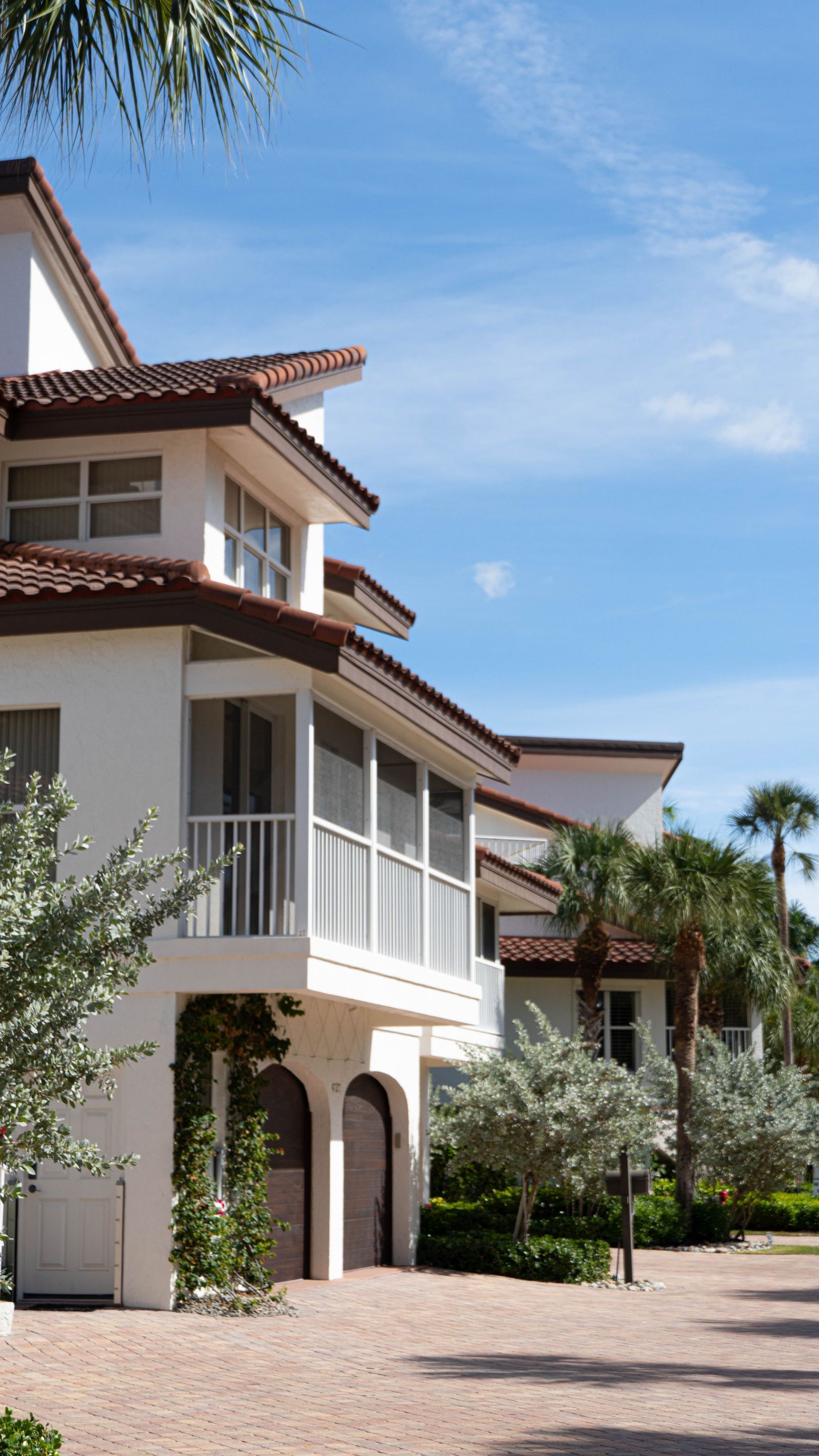
There's a particular kind of quiet that settles over a home inside Amelia Island Plantation once its owners drive out through the gate for the season. The house is behind a guarded entrance in a resort community on the south end of the island, which feels like the safest place a second home could possibly sit. And in most ways it is. But that same gate that keeps the world out also keeps help out, and for the months you're gone, the thing standing between a small problem and an expensive one is whether anybody is getting past it to look.
That's the quiet argument for home watch on Amelia Island Plantation, and it's a different argument than it is anywhere else on the island. The Plantation isn't a single kind of place. It runs from oceanfront lots to homes and condos backed up against the marsh, with golf-course fairways threaded between them, so one neighborhood behind one gate ages houses in three or four different ways at once. Watching a home here well means knowing which of those your house actually is, and getting a trusted set of eyes to it on a schedule while you're a thousand miles away.
This is the version we'd walk a new Plantation owner through, whether your place is an oceanfront condo near the resort, a marsh-side home on a quiet cul-de-sac, or a house sitting right on a fairway. Start with what makes the south end its own thing.
Two houses in one neighborhood: what home watch actually watches on the Plantation
Most people think of home watch as one fixed check that's the same everywhere in Florida. It isn't, and the Plantation is the clearest proof of why. A home on the ocean side and a home on the marsh side sit inside the same gate, pay into the same community, and fail in almost opposite ways.
On the ocean side, salt air is the constant. It works on screens, metal railings, door and window hardware, and HVAC coils all year, whether anyone's home or not, and it does the most damage to the things you'd never think to check until a system quits. Near-ocean and oceanfront units also take the brunt of wind-driven rain and storm exposure, so the sliding doors and screened lanais that face the water are the first place a summer storm looks for a gap. On the marsh side, the enemy is slower and wetter. Humidity hangs longer against the water's edge, a closed-up house works its AC hard to hold that moisture down, and the EPA is blunt about what happens when it can't: keep indoor humidity in check or mold gets a foothold. Pests press in from the marsh toward any home that's dark and still.
A good home watch visit on the Plantation is built around which of those your house is fighting. Someone walks the interior and the exterior on a regular cadence, checks for the water intrusion, humidity, pests, salt-air wear, and storm damage your specific lot is prone to, leaves the house locked and set, and sends you a dated photo report after every visit so you see exactly how it was left. If you want the full walk-through of what that visit covers, we keep it in what a home watch visit actually includes. And because nobody stays in the house, it isn't house sitting, a distinction we lay out in home watch versus a house sitter.
The wellness check is where the golf course and the salt air get caught
Here's the Plantation wrinkle nobody warns you about when you buy on a fairway: your ground is wet on purpose. Golf-course-adjacent lots sit next to irrigation and overspray that keep the soil and the area around the foundation damp year-round, even in a dry stretch, even when nobody's there to notice. That steady moisture is exactly the kind of slow, invisible pressure that never shows up on a quick drive-by but absolutely shows up on a floor or a foundation over a season.
Catching that is the job of a real home wellness check, which is a full inspection rather than a glance from the driveway. Every room, every system, every exterior wall, on the same checklist every visit: interior walked for moisture, stains, and smells; HVAC tested for how it's holding humidity against the marsh air; plumbing spot-checked; the exterior looked over for drainage, roof, siding, screens, and the salt-air corrosion the south end deals with; security verified. The consistency is the whole point. Because the check is identical each time, the change between visits is what jumps out, a reading that crept the wrong way, a damp spot near a fairway-facing wall, a screen the salt finally chewed through.
And when something is found, you're the first to know before anyone's dispatched. Everything flagged comes with a photo and a plain-English note, and the call stays yours: fix it now, monitor it, or plan it into a future visit. On a house you're not living in, that documented trend line is the closest thing you have to being there.
Behind the gate, getting help in is half the job
This is the part that separates the Plantation from almost anywhere else on Amelia Island. Watching the house tells you something's wrong. Fixing it means getting a person to the door, and on the Plantation that means getting them through a guarded gate and community check-in first, then back out again. An HVAC tech, a pool service, a delivery, the roofer coming to look at a leak, none of them just pull into your driveway here. Someone has to route them in. And because so many of your neighbors are part-time too, there often isn't anyone next door to do it.
That's what a keyholder is for, and it's the piece Plantation owners lean on hardest. A keyholder holds a secure copy of your key and handles gate and community access on your behalf: letting the vetted contractor in, meeting the delivery, staying while the work happens, locking up behind everyone, and sending photos of how the home was left. It's also who actually answers when the alarm trips at 2 a.m., instead of a monitoring company dialing a number that goes to voicemail in another time zone and reaching a responder who couldn't get past the gate anyway. If you want to understand how that trust is built and who's accountable, what a keyholder service is covers it.
Put the two together and the loop closes. Home watch finds the slow leak in week two; the keyholder gets the plumber through the gate in week two. That's the entire difference between a mop-and-a-fan repair and an October mold remediation. Inside a gated resort community, watching without access is a warning you can't act on, and access without watching is a key nobody's using. A Plantation home needs both.
When watching turns into managing the whole property
For plenty of owners, a weekly check and a keyholder is exactly right. For others, the list of what the house quietly needs grows past any single visit. The HVAC wants servicing on a cadence. The exterior needs pressure washing before the marsh mildew and the salt haze set in. Filters, gutters, pest control, irrigation, the pool, an HOA notice that needs answering, a vendor who didn't show and needs chasing. None of it is hard. All of it is easy to drop when you're running it by phone from out of state.
That's the line where home watch becomes property management, the same eyes on the house extended into handling what they find. We build a maintenance calendar specific to your Plantation home and its systems, book and meet the vendors on-site past the gate, inspect the work, coordinate with the community where it's needed, and keep it all in one file so nothing becomes "did we do that last year?" You approve; we execute. For an owner who'd rather not be the long-distance general contractor for a house they visit twice a year, that's the difference between owning a second home and inheriting a second job.
The clean way to think about it is a ladder. Home watch and wellness checks are the base, the eyes and the documented inspection. A keyholder adds hands and access through the gate. Property management adds coordination and follow-through. You climb only as far as your house and your travel calendar actually need, and you add rungs as the empty stretches get longer.
Arriving at the Plantation should feel like the resort it is
The last piece is the one owners feel most and plan for least: the day you come back. Picture the two versions of it on the south end.
In the first, you clear the gate after a long drive and open a house that's been sealed against the marsh humidity at 80 degrees for a month. It's warm and a little stale. The AC has to claw the temperature and moisture down over the next several hours while you wait, the fridge is empty, and your first evening in a resort community is spent on a chore list instead of on the beach or the veranda.
In the second, someone came through a day ahead. The AC's been running the house down to a comfortable temperature since yesterday, the place has been aired out and checked, the water's confirmed on, and the fridge has the basics for the morning. You walk in, drop your bags, and you're on vacation. That's the part of concierge service Plantation owners value most once they've felt both versions, and it's the natural bookend to the watching, because the same team that kept eyes on the house all season is the one opening it for your return. Our overview of what a home concierge service does gets into the range of it, from seasonal opens and closes to getting the house ready before guests arrive.
Back at the gate
The gate that makes the Plantation feel so secure is the same gate that leaves a house on its own between your visits. The answer isn't a longer checklist you run on your way out. It's someone local walking the house on a schedule, documenting what they see whether your lot faces the ocean or the marsh, holding a key for the moment something needs fixing, getting the right people through the gate to fix it, and opening the place back up the day before you land.
If your Amelia Island Plantation home spends part of the year empty behind that gate, that's exactly what we do for owners across the south end. Learn about home watch on the Plantation, or call us at (718) 644-6764 and we'll build the visits around your specific house and how you use it.