
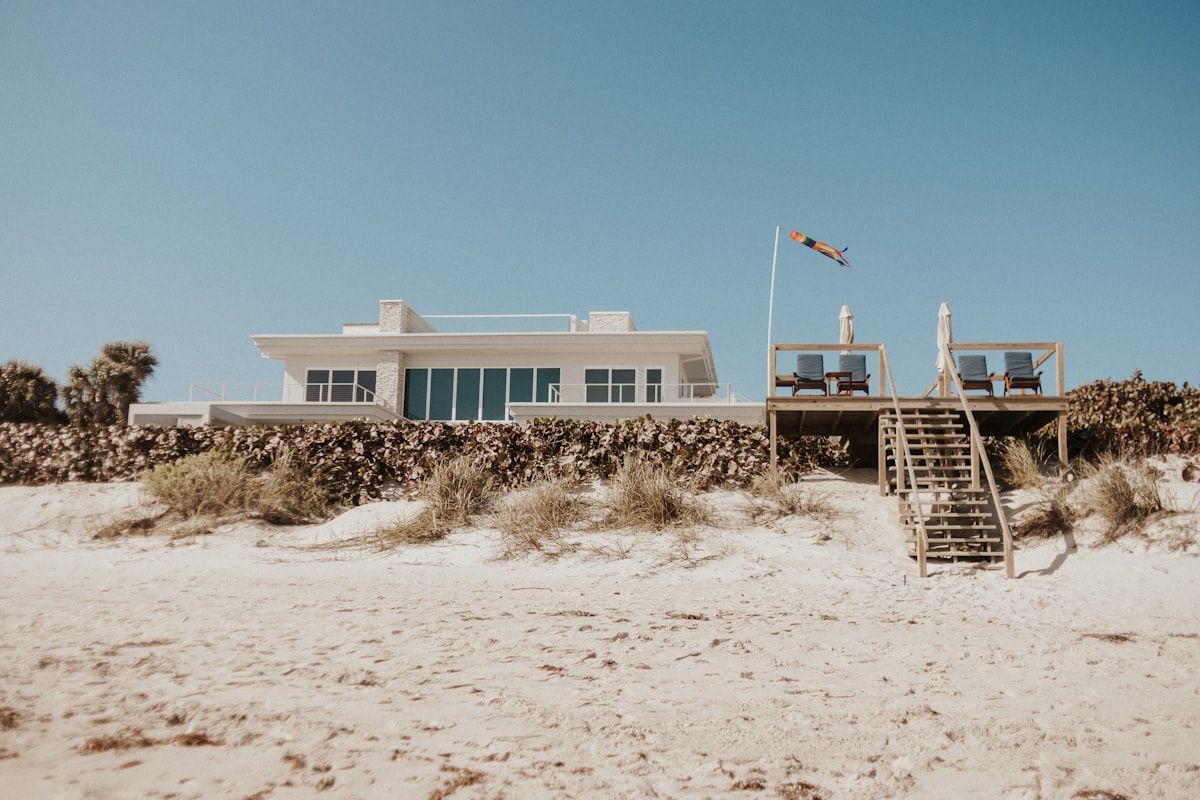
If you own a home on Amelia Island and live somewhere else most of the year, you've probably searched for the thing you need without knowing what it's called. House sitter isn't right, because you don't want anyone living there. Property manager sounds like it's for rentals. What you're actually looking for is the category the industry calls absentee homeowner services, and at its center is vacant home monitoring: someone local keeping documented eyes on an empty house so a small problem gets caught while it's still small.
That's the case for absentee home service, and it's worth being precise about, because the wrong mental model costs money. A vacant home isn't a home that's simply "fine until you're back." It's a building that keeps changing while nobody's watching, in one of the more humid, storm-prone corners of the country. This is the version we'd walk a new Fernandina Beach owner through: what vacant home monitoring actually covers, why the details of how it's done matter, and where it stops being a check and becomes full management.
"Absentee homeowner" isn't a status, it's a set of problems
The phrase sounds like a description of you. It's really a description of the house. An absentee-owned home has a specific risk profile: it sits empty for weeks or months, so the ordinary early warnings a lived-in house gives off, the drip you'd hear, the smell you'd notice, the thermostat you'd glance at, all happen to an empty room with nobody in it.
On a barrier island that profile is sharper. Northeast Florida runs hot and humid for months, hurricane season stretches June through November, and salt air works on the exterior the entire time. The National Home Watch Association frames the whole category around this gap: a vacant home needs a regular, knowledgeable set of eyes precisely because the failures that matter most are the slow, quiet ones that a snapshot never catches. Absentee homeowner services exist to close that gap. Everything else is detail.
What vacant home monitoring actually covers
A monitoring visit is not a drive-by or a glance from the street. Done properly, a vacant home check is a walked inspection of the interior and exterior on a set schedule, looking for the specific ways an empty coastal house fails:
- Water intrusion and humidity: the thing that ruins a house here. A supply line, a roof seal, a failed window, or a stalled AC that lets moisture climb. The EPA is blunt that unchecked indoor moisture invites mold, and a closed-up house holds it.
- HVAC function: whether the system is actually cooling and, more importantly, pulling humidity down, because in summer that's the difference between a dry house and a greenhouse.
- Pests and wildlife: anything finding a way into a home that's dark and still.
- Storm and exterior damage: after weather, and on the ordinary weeks between it: roof, siding, screens, drainage, salt wear.
- Security: doors, windows, and alarms verified; the house left locked and set.
And then the part that separates monitoring from a favor: after every visit, you get a dated photo report. You see what we saw, from wherever you are. What a home watch visit actually includes walks through a full one. For the deeper diagnostic version that reads a home's humidity, air, and systems like vital signs, a home wellness check goes a layer further.
Why weekly and documented beats a favor
Two absentee owners can both say "someone's checking on the house" and mean completely different things. The details are the whole value.
Cadence. In coastal Florida, weekly is the practical standard, not monthly. Humidity, salt air, and summer storms cause problems that go from small to expensive within days, so a monthly visit tends to find the damage rather than prevent it. A leak caught in week two is a mop and a fan; the same leak found a month later is a mold remediation and a flooring bill.
Documentation. A report trail is what turns "I think it's fine" into "here's the house, dated, every week." That record is what lets you stop wondering between visits, because you're not guessing, you're looking.
A real routine, not a favor. This is where a professional service parts ways with leaning on a neighbor. A friend is generous for bringing in a package, but a slow humidity trend or a leak behind a wall isn't something a quick look catches, and understandably nobody wants to be the one you call when the alarm trips at 2 a.m. We lay out that exact comparison in home watch versus a house sitter. The favor is free right up until the week it isn't.
Monitoring finds it; a keyholder fixes it
Here's the limit of watching alone: a report tells you something's wrong, but someone still has to open the door. That's the other half of a real absentee home service, and it's a keyholder.
A keyholder holds a secure, logged copy of your key and uses it on your behalf: letting the vetted contractor in the same week instead of the same season, meeting a delivery, staying while the work happens, and locking up behind everyone. It's also who responds when the alarm trips at 2 a.m., instead of a monitoring company reaching voicemail in another state. Put the two together and the loop closes. Monitoring finds the leak in week two; the keyholder gets the right hands there in week two. Watching without access is a warning you can't act on; access without watching is a key nobody's using. A vacant home needs both.
When monitoring becomes full management
For many absentee owners, weekly monitoring plus a keyholder is exactly the right amount of service. For others, the list grows past what any single visit covers: HVAC on a cadence, roof and gutters, pressure washing, pest control, moisture management, and vendors to schedule, meet, and chase. None of it is hard, and all of it is easy to drop from out of state.
That's the line where vacant home monitoring becomes property management, the same eyes on the house extended into handling what they find. We build a maintenance calendar specific to your home and its systems, book and meet the vendors on-site, inspect the work, and keep it all in one file. You approve; we execute. Think of it as a ladder: monitoring and wellness checks are the base, a keyholder adds hands and access, and property management adds coordination and follow-through. You climb only as far as your house and your travel calendar actually need.
What an absentee owner should really be buying
Strip it all down and the thing you're shopping for isn't a visit. It's the closing of the gap between the day you leave and the day you come back, covered by someone local who knows how to see trouble early, documents everything, can actually get into the house to fix what they find, and treats your empty home the way you would if you were standing in it.
If your Amelia Island or Fernandina Beach home spends part of the year vacant, that's exactly what we do for absentee owners across the island. Learn about our home watch service, or call us at (718) 644-6764 and we'll build the monitoring around your specific house and how often you're actually here.