
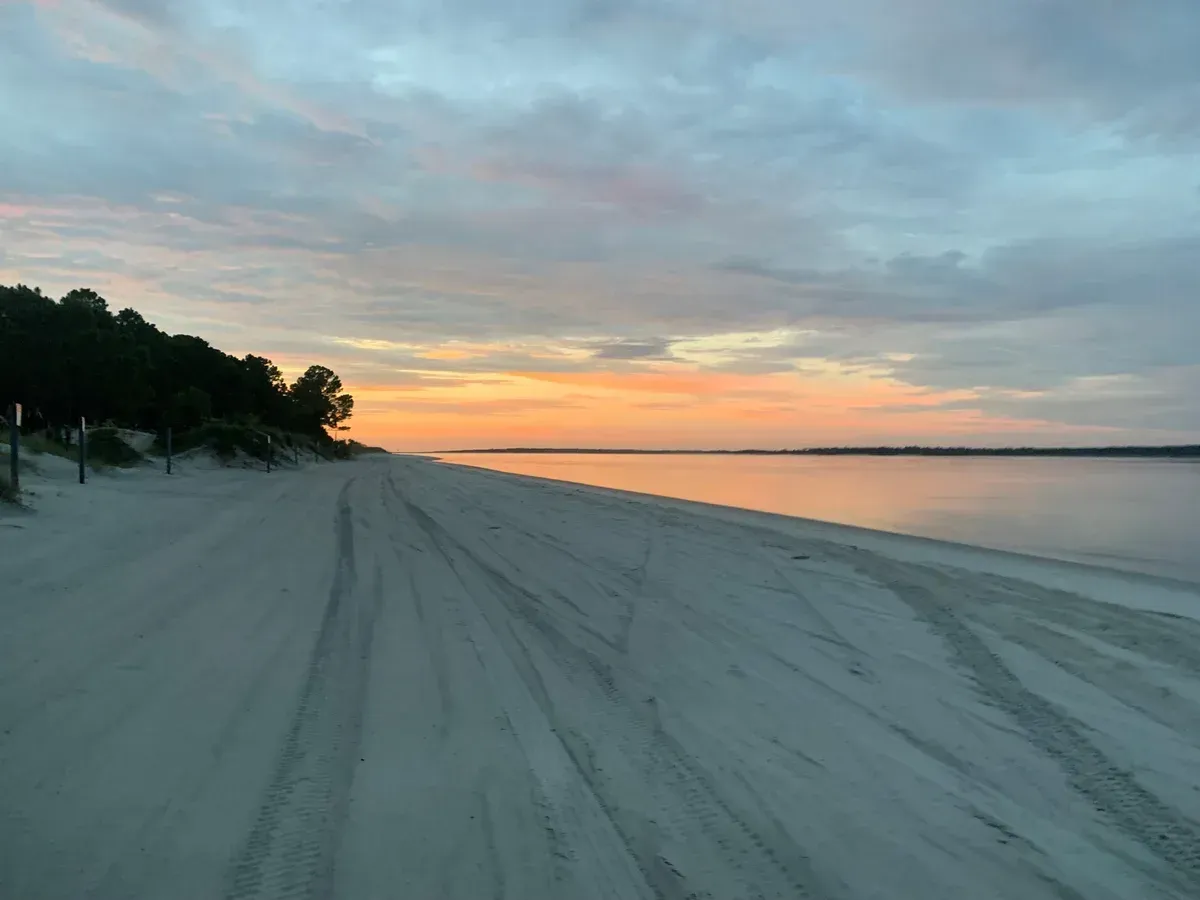
If you want the one stretch of Amelia Island beach with nothing built behind it, head to the state park at the southern tip, where the island ends at Nassau Sound. The park manager describes the view this way: north, condos and beach houses run up to the dunes; south, toward the Talbot Islands, it's only forest, marsh and sand. The park protects a little over 200 acres of that undeveloped shore.
Getting in takes some planning. Beach parking is capped at 300 people at a time and 600 a day. Once it fills, the park closes to new arrivals and reopens after roughly 150 people leave. It's open 8 a.m. to sunset year-round with no after-hours access, and entry is $2 per person at an honor box, so bring correct change. Use the marked spaces in the two main lots, not the vegetation.
Expect a wild beach, not a serviced one. There are no lifeguards, the only shower is an outdoor one beside the Bait and Tackle restrooms, and the park allows 4x4 beach driving during open hours. Low tide is the time for shelling. Walk the line where the highest waves stop and you'll find clam, scallop, oyster and periwinkle shells, plus the occasional shark tooth.
Two nesting seasons set the rules:
- Shorebirds nest March through September, and parts of the southern point close to vehicles and horses. Anglers and walkers can still pass along the waterline if they keep their feet wet.
- Sea turtles nest May through October. Fill in holes and sandcastle moats, and no lights or driving on the beach at night.
Florida State Parks keeps pets off its shorelines, and this park asks you to leave dogs at home. Fishing, riding and the bike trail are covered under things to do at Amelia Island State Park. The resort community to the north has its own Amelia Island Plantation area page, and Boneyard Beach on Big Talbot Island is just across the sound.