
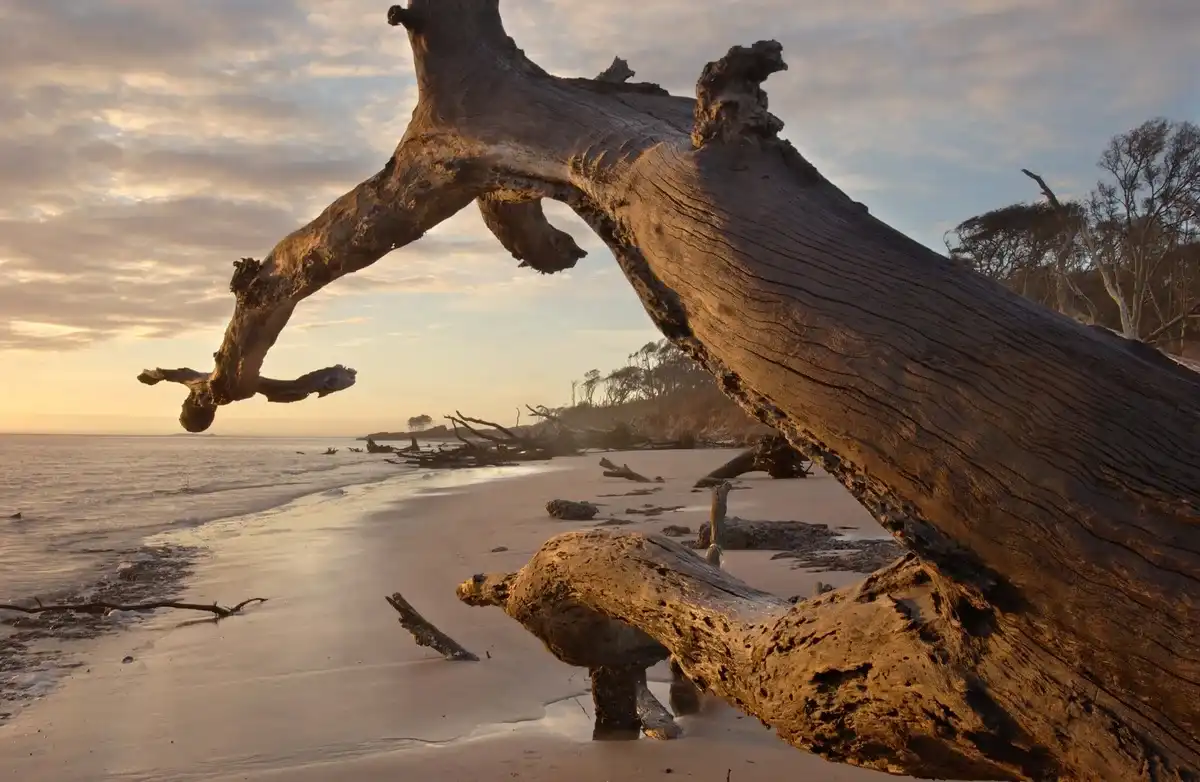
If you've seen photos of bleached tree trunks sprawled across a beach near Jacksonville, you've seen Boneyard Beach on Big Talbot Island, the next island south of Amelia across Nassau Sound. Over the past few hundred years the shoreline here has retreated fast. As the bluffs eroded, live oaks and cedars fell onto the sand, and salt and sun turned them white. According to the park, the fallen trees still protect what's left by breaking up wind and waves and slowing the erosion of the 30-foot bluffs behind them.
You get to the beach on foot. The half-mile Blackrock Trail runs through hammock forest to the shore, but its lot holds only 15 cars. If it's full, park at the Bluffs picnic area about a mile north and take the Shoreline Trail down. One $3 vehicle fee, paid by QR code, covers all four Big Talbot parking areas for the day, and the gates are open from 8 a.m. until sundown.
Go at low tide if you can. The beach widens and the "black rocks" appear, dark formations made of soft compacted soil, with small tidepools around them. The park's rules for the shore:
- Swimming isn't recommended because of strong currents in the sound, and no lifeguard is on duty.
- Dogs aren't allowed on the beach.
- Driftwood is protected, so leave every piece where it lies.
- Stick to the marked trails so the bluffs don't erode faster.
The Bluffs has three covered pavilions with grills, first come, first served, and there are restrooms at the Bluffs and at the boat ramp. For a beach you can swim at, Little Talbot Island is just south, and the George Crady fishing bridge runs beside A1A over the sound to the north.
The park's own write-up points out that developed beaches take storm surge and flooding harder than wild ones like this. If you own on one of Amelia Island's built-up stretches, water intrusion monitoring catches the slow leaks a storm can leave behind.