
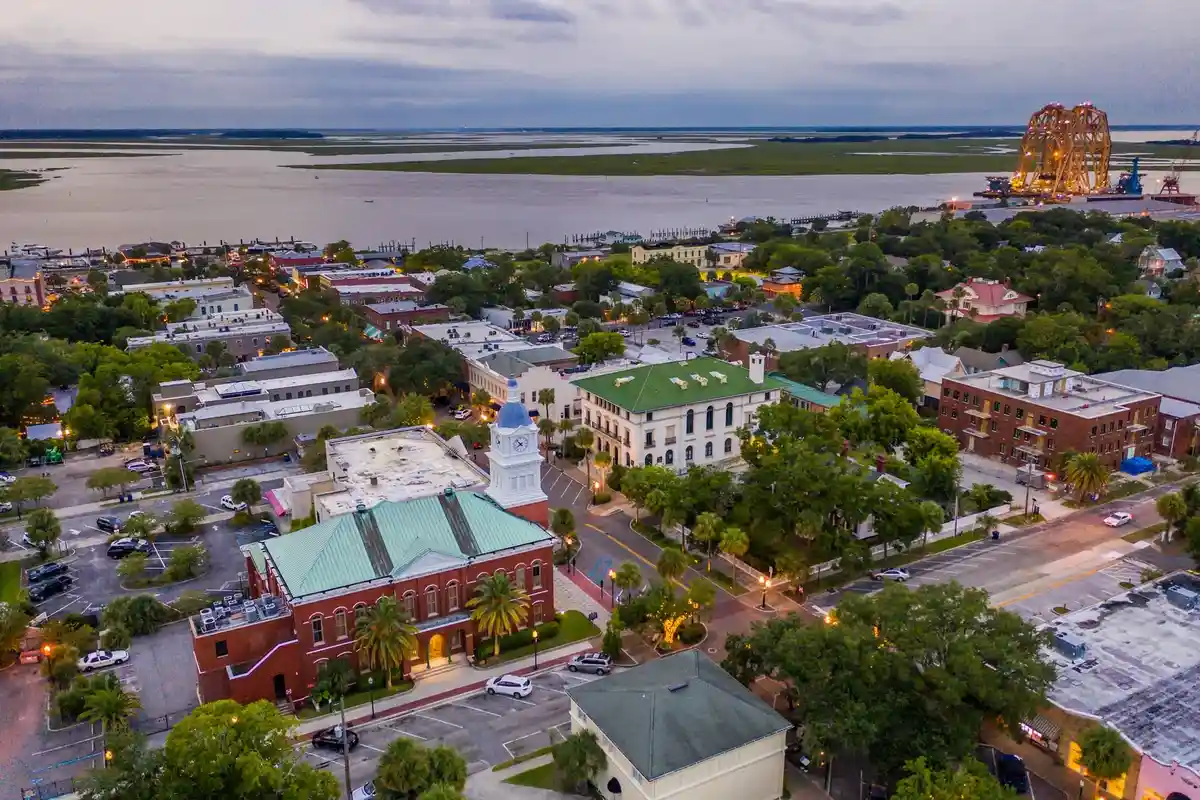
If you want the Fernandina Beach most people picture, start at the foot of Centre Street by the Amelia River and walk east toward 8th Street. That stretch is the spine of a National Register historic district of more than 50 blocks, which the visitors bureau says holds more than 400 historic structures. The city's own history explains the timing: when David Yulee's railroad from Fernandina to Cedar Key arrived, the town shifted south from its first site in Old Town, so most of what you see downtown dates to the late 19th and early 20th centuries.
The first stop is the Amelia Island Welcome Center, in the old train depot at 102 Centre Street, which opened in the last year of the 19th century. The eight flags that have flown over the island hang inside, a statue of Yulee stands out front, and you can pick up a walking map there. It's open 364 days a year. From the depot, Centre Street is mostly shops, galleries, bars and restaurants in restored commercial buildings, and the residential blocks around it hold the district's Victorian houses. The Bailey House at Ash and 7th, an 1885 Queen Anne with turreted corner bays, is one the visitors bureau singles out.
For a guided version, the Amelia Island Museum of History runs an hour-long Centre Street walking tour of about eight blocks, taking in the old Customs Office (now the post office), the courthouse and the Chandlery Building. It's by reservation for groups of four or more. Fernandina Beach Main Street, a nonprofit, works on the district's businesses and its tree canopy.
The waterfront is about to change. The city plans to start rebuilding Fernandina Harbor Marina in summer 2027, after the Shrimp Festival, and some operations have already moved: the Pirate Voyages ticket kiosk now sits in Parking Lot B, with Amelia River Cruises following. If you own property in the district, the city's updated Downtown District Guidelines are now in effect, and project management can keep a renovation moving through Historic District Council review.