
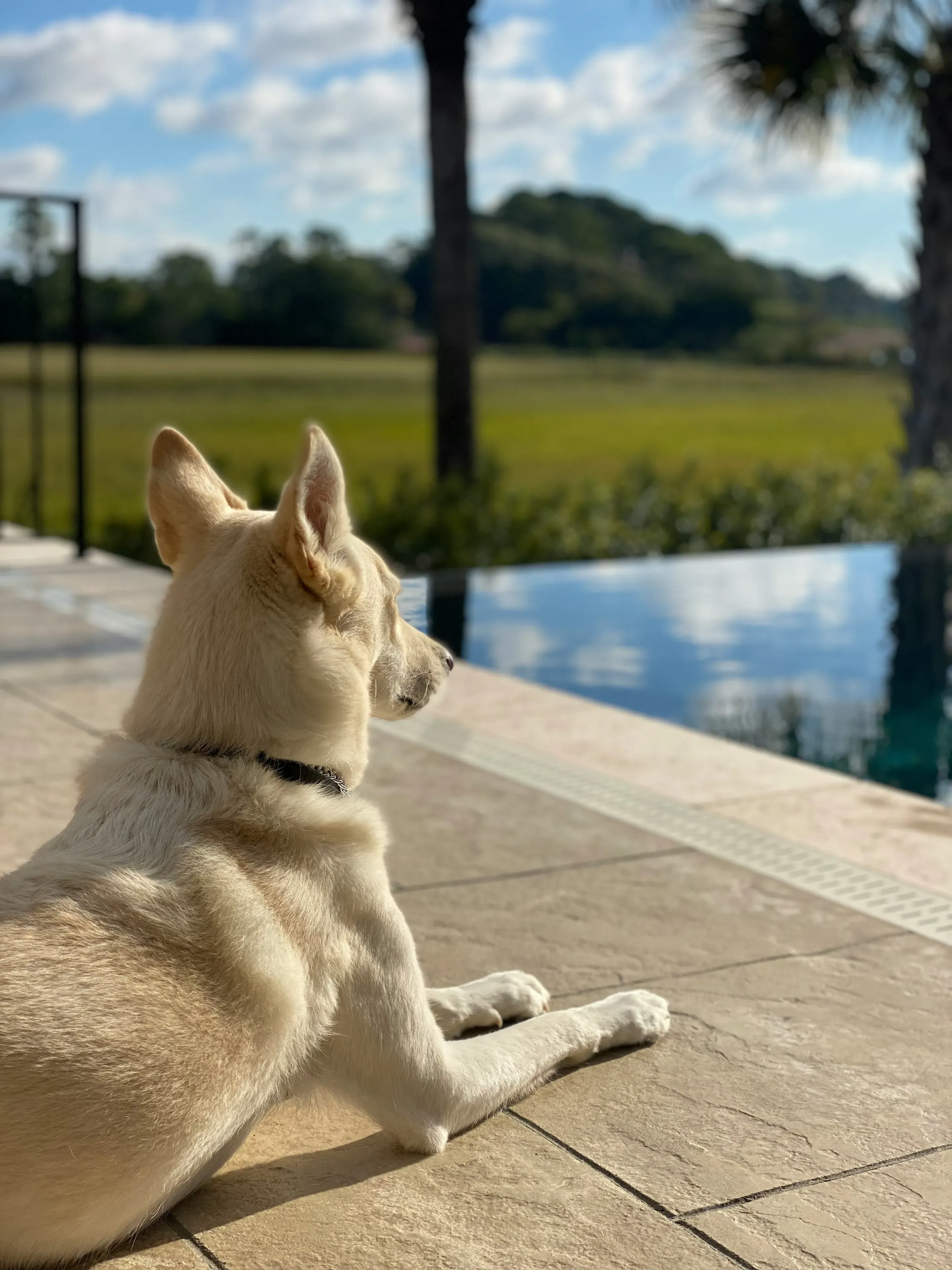
If you live on Amelia Island with a dog, you picked one of the better places in Florida for it. Thirteen miles of coastline, broad beaches that allow dogs in most areas, a downtown that tolerates (and often welcomes) dogs on patios, and a pet-services ecosystem that's grown up around the island's resident and visitor population. The rules are real, and they matter, but the lifestyle is genuinely good for dogs.
This is the ground-truth version of what pet ownership looks like on the island.
Beaches and where dogs can go
Amelia Island beaches allow dogs year-round in most areas, with a handful of rules to know:
- Dogs must be on a leash unless inside a designated off-leash area.
- Voice control alone is not sufficient inside Fernandina Beach city limits.
- Dog waste must be picked up. Bag stations exist at most beach access points, but carrying your own bags is smart backup.
- Some protected areas (dune restoration zones, shorebird nesting sites during breeding season) are off-limits to dogs entirely. Signage marks these.
Main Beach Park at the Fletcher Avenue roundabout is one of the more dog-accessible access points and has parking, restrooms, and shade. South-end beaches in the Plantation and Summer Beach areas allow dogs under the same leash and cleanup rules. American Beach and Peters Point also permit dogs.
The beach rules vary slightly between incorporated Fernandina Beach and unincorporated Nassau County. Signage at access points usually posts local rules; when in doubt, keep the dog leashed and cleaned up after.
Parks and trails
Egans Creek Greenway is the largest continuous natural area on the island and allows leashed dogs on the trail system. It's a genuinely good walking environment year-round, with shade, wildlife, and distances that scale from a short loop to a longer circuit. Alligator presence is a real thing in the greenway; keep dogs leashed and on the trail, and don't let them approach water edges.
Central Park in Fernandina Beach and several smaller neighborhood parks allow leashed dogs. A handful of dedicated off-leash dog parks exist on the island and nearby mainland areas, with rules posted at the entrance.
Beach and park access is easier at the cooler shoulder seasons (spring, fall) than in peak summer. The sand gets hot enough to burn paws by mid-morning in July and August. Early morning and evening are the practical windows.
Dog-friendly restaurants and businesses
Centre Street and the surrounding downtown grid have a meaningful number of restaurants with patios that welcome leashed dogs. The specifics vary (some are dog-friendly, some tolerate, some prohibit) and the best approach is to call ahead or check the current posted signs. In general, outdoor patios are open to well-behaved dogs; indoor seating is not, under state health rules.
Many of the locally-owned shops on Centre Street welcome dogs inside, and water bowls on sidewalks during summer are a common sight. It's not a universal rule, but the island skews dog-friendly overall.
Veterinary care on the island
Amelia Island has several full-service veterinary clinics handling routine care, vaccinations, dental, minor surgeries, and most primary veterinary needs. For specialty care (surgical specialists, advanced imaging, emergency overnight), Jacksonville's larger veterinary hospitals are within the 45-to-60-minute drive.
Emergency veterinary services on the island are limited outside business hours. Anyone with a pet on the island should have a plan for after-hours emergencies, typically involving one of the Jacksonville emergency hospitals. Keep the drive time and route mapped in advance.
Grooming, boarding, and pet services
The island has multiple grooming operations serving routine and breed-specific needs. Wait times can run long in peak tourism seasons; booking ahead is common.
Boarding options on the island are limited compared to mainland facilities. Many residents and second-home owners prefer in-home pet sitting over boarding for the stress reduction alone, and local pet care handles in-home visits, daily walks, feeding, medication, and overnight stays as a companion service to property management clients. For visitors bringing pets, checking pet policies on vacation rentals and verifying any pet-service availability before arrival avoids surprises.
The heat problem
Amelia Island summers are hot, and the heat is the single biggest pet concern on the island. Humid 90-degree days can make afternoon walks dangerous for most dogs, and especially for short-nosed breeds (bulldogs, pugs, boxers) that struggle with heat dissipation.
Practical habits that matter:
- Walk early morning or evening. Skip midday walks in June through September.
- Test pavement and sand temperature with your hand before walking. If it's too hot for your palm, it's too hot for paws.
- Carry water on every walk of any length.
- Leave the dog home for errands if the car can't be kept cool. Florida temperatures inside a parked vehicle become dangerous within minutes.
- Know the signs of heat stress (excessive panting, stumbling, dark red gums, collapse). Act fast if you see them.
Hurricane season and pet safety
Hurricane evacuations get complicated with pets. Not every shelter accepts animals, and pet-friendly accommodations off the island fill up fast when evacuation orders are issued. Any pet owner on Amelia Island should have an evacuation plan that specifically addresses the pet: where they'll go, what supplies are pre-packed, and what documentation is needed (vaccination records, medications, microchip details).
A go-bag for pets should include food for a week, water, medications, leash, collar with ID, carrier, veterinary records, and any comfort items. Having it ready before hurricane season starts means one less thing to figure out when a storm is forecast.
The daily reality
For residents with pets, the island's lifestyle genuinely works. Morning walks on the beach, afternoon naps in the shade, evening strolls down quieter residential streets, and a community that's broadly accepting of dogs in public spaces. The summer heat is the main constraint; the rest of the year is pleasant for both ends of the leash.